A Young Father's Lived Experience
June 2026 Newsletter
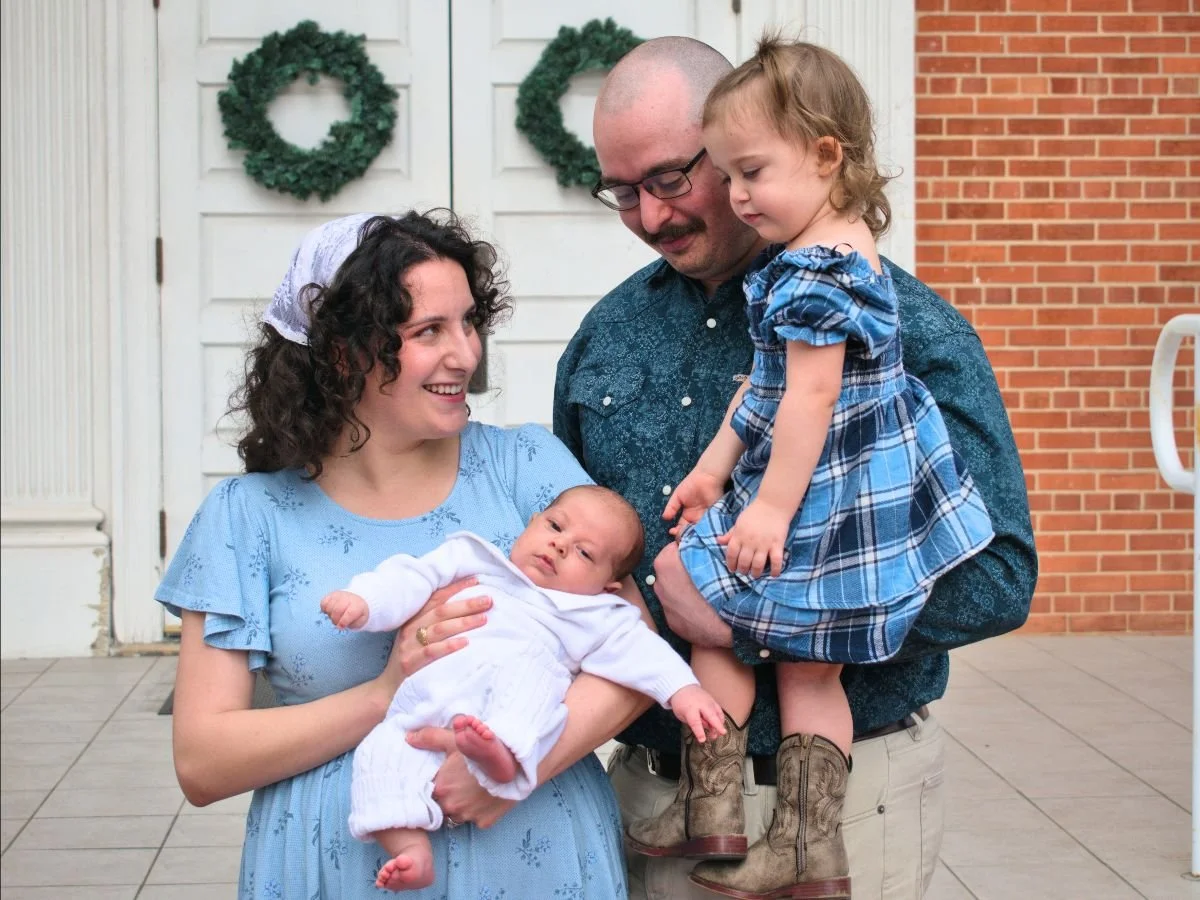
Name: Luke Foreman
Years as a Father: 2.5
Number of Children: 2
Hometown: College Station, TX
What does Fatherhood mean to you?
The role is ever-changing, as is the little person you’re taking care of. Your responsibility grows with each child and it’s really beautiful.
When you have your first kid, and they are a little tiny infant, really your only job is to keep that tiny human alive, to take care of the baby, and support your wife in the process. But as they get older, your role as a father expands to be a whole lot more.
How has fatherhood changed your heart? What have you discovered about yourself since becoming a father?
Responsibility changes everybody. It changes your priorities in life, and changes how you see the world. In some ways, it makes you more weary of the world we live in. I fear for the world my children are going to end up in.
I’ve always been aware of my surroundings, and knowing I can protect myself is one thing. Having the added responsibility of protecting a wife and children really makes you realize how vulnerable you are. It has made me rethink a lot of my perception of the world, and what it means to take action to ensure safety and protection over my family.
Tell us about a challenge you’ve experienced or taken on as a father.
The newborn phase with my firstborn was incredibly difficult. My wife’s pregnancy and labor took a big toll on her body, and frankly, I felt kind of useless at first. Our baby was totally breastfed and refused any bottles, so I couldn’t help in that way. Neither of our families were able to assist postpartum, so she and I needed to lean on each other in a new way.
What I could do was change every diaper I could, and I took as many night shifts with our baby as possible so my wife could rest and recover. I made sure she was hydrated and nourished, I helped her in and out of bed, providing any sort of assistance and care I could.
Developing patience with a toddler has also been a big challenge. A challenge to self regulate in a way that enables me to keep calm and nurture them.
What was the most important lesson you ever learned from your own father?
When I was in middle school, I thought the right thing to do when faced with bullies was to turn the other cheek and ignore them. Unfortunately, that wasn't solving my issue.
Eventually, I told my dad what was going on. He told me that I shouldn’t tolerate disrespect and unreasonable behavior from anybody. He said that in a way that implied finality. Me, being young, asked him if that included himself.
He paused for a moment, and then told me, if anyone in a position of authority, including himself, was being unreasonable, then yes, I shouldn’t tolerate it.
This helped me get through the tough situations as a teenager and was a huge lesson in learning my own confidence. This lesson was applied in my adulthood years later, when we had a disagreement.
I told my father he was being unreasonable, and he stopped, considered, and apologized. We've developed a relationship of mutual respect and love for each other as father and son.
What do you want your children to know about what it means to be a man?
Fatherhood is about service to your family, as a father is no longer just taking care of himself, but he’s taking care of his wife and his children as well. I want them to know that masculinity isn’t just about being strong or intimidating. A real man knows what he is capable of, and when to use that strength.
A real husband and father is supposed to lead his family spiritually above all, and to serve and protect them always.
"In revealing and in reliving on earth the very fatherhood of God, a man is called upon to ensure the harmonious and united development of all the members of the family." - St. John Paul II
How to Build a Giant Jenga Set for Your Backyard
This fun summer project is a wonderful one to tackle as a family. It is straightforward enough for beginners, requires only basic tools, and the reward at the end is years of backyard fun together.
Dads, we especially encourage this to be a team-building activity with the kids!
What You Will Need
Five prime kiln-dried 2x4x96 studs from your local hardware store
80-grit and 220-grit sandpaper
Orbit sander
Miter saw
Handheld planer (helpful for cleaning up imperfect cuts)
Paint in your choice of colors (optional, but adds a fun, personalized touch)
A Note on Choosing Your Wood
Do not skip this step. Pull each board fully out of the pile and sight down the entire length to check for warping, knots, dents, or cracks. A piece that looks fine in the store can reveal problems once you get it home and start cutting.
Step 1: Cut Your Blocks
Each Jenga piece should measure 7.5 inches long, 2.5 inches wide, and 1.5 inches thick. Set a stop block on your miter saw at 7.5 inches to keep every cut consistent, then aim to cut 54 pieces total.
Once length is handled, trim each piece to 2.5 inches wide. The thickness takes care of itself since a standard 2x4 stud is already 1.5 inches thick. When all 54 pieces are cut, your stacked tower will stand roughly 2 feet 2.5 inches tall.
Step 2: Sand Every Piece
Before sanding, use a hand planer to smooth out any rough edges left from cutting. Then work through all 54 pieces with 80-grit sandpaper to remove rough patches, followed by a pass with 220-grit for a smooth finish.
If you have an orbit sander, try inverting it and bracing it between your knees. It speeds the process considerably and saves your hands.
Remember, always wear safety glasses and take appropriate safety measures!
Step 3: Paint (Optional)
Divide your 54 pieces into six sets of nine and paint each set a different color, leaving one set natural. Paint one side at a time and let each side dry fully before flipping. Once the paint has dried for a few days, do a light pass with the 220-grit sandpaper over the painted pieces.
Paint can make blocks grip each other more than you want, and a final sanding keeps the game playing smoothly.
To Play
Stack your blocks in rows of three, rotating each layer 90 degrees, building up to an 18-layer tower. Players take turns pulling one block from any layer below the top and setting it on top.
Whoever sends the tower down loses. When it falls, it falls with force, so make sure everyone is standing clear!